

When I first met my now-husband in college, I knew that I wanted to marry him. I also knew that I needed to grow in some areas in order to be the best partner I could be. One of those areas of growth was apologizing. Unlike some people, I have never held the belief that apologizing equals weakness. However, prior to meeting my now-husband, I had never really put much thought into apologizing and good apologies. I would apologize, but I wouldn’t really know whether or not I had been successful at it. So, at the beginning of our relationship, I put some time into figuring out what makes a good apology and what makes a bad apology. What I know for sure after all these years is that there are 5-year-olds who are better at apologizing than many grown adults.
For people who are emotionally immature, mistakes are directly linked to their worth as a person. If they make a mistake, they think it means that they are a bad person versus that they are a good person who simply made a mistake. Emotionally immature people can’t bring themselves to apologize, because they view apologizing as classifying themselves as a bad person.
I learned very quickly into my deep dive about apologies years ago that there are some very obvious signs of bad apologies. Here are some examples of bad apologies:
“I am sorry IF I hurt you.”
AND
“I am sorry, BUT . . .”
If an apology has “if” or “but” in it, then it is a bad apology. If there is “if” in the apology, there is no accountability for the person who is apologizing. It is expressing doubt that a mistake was even made. And, “but” usually involves blaming the other person and negates everything stated prior to the “but”. These types of apologies are more about sweeping the issue under the rug and/or blaming the other person than actually apologizing.
Many people also get stuck on intention. If their intention was good, then they shouldn’t need to apologize. This line of thinking is outdated. Intention is no longer the determining factor in whether or not to apologize. Impact is now what matters the most. Even if someone had great intentions, the impact on the other person is what determines if an apology is needed. This seems to be a tough concept for people who are emotionally immature, because a good intention means they are a “good person” and don’t need to apologize regardless of the impact.
One person who has studied the science of apologizing is Adam Grant. Here is what he thinks makes a great apology:
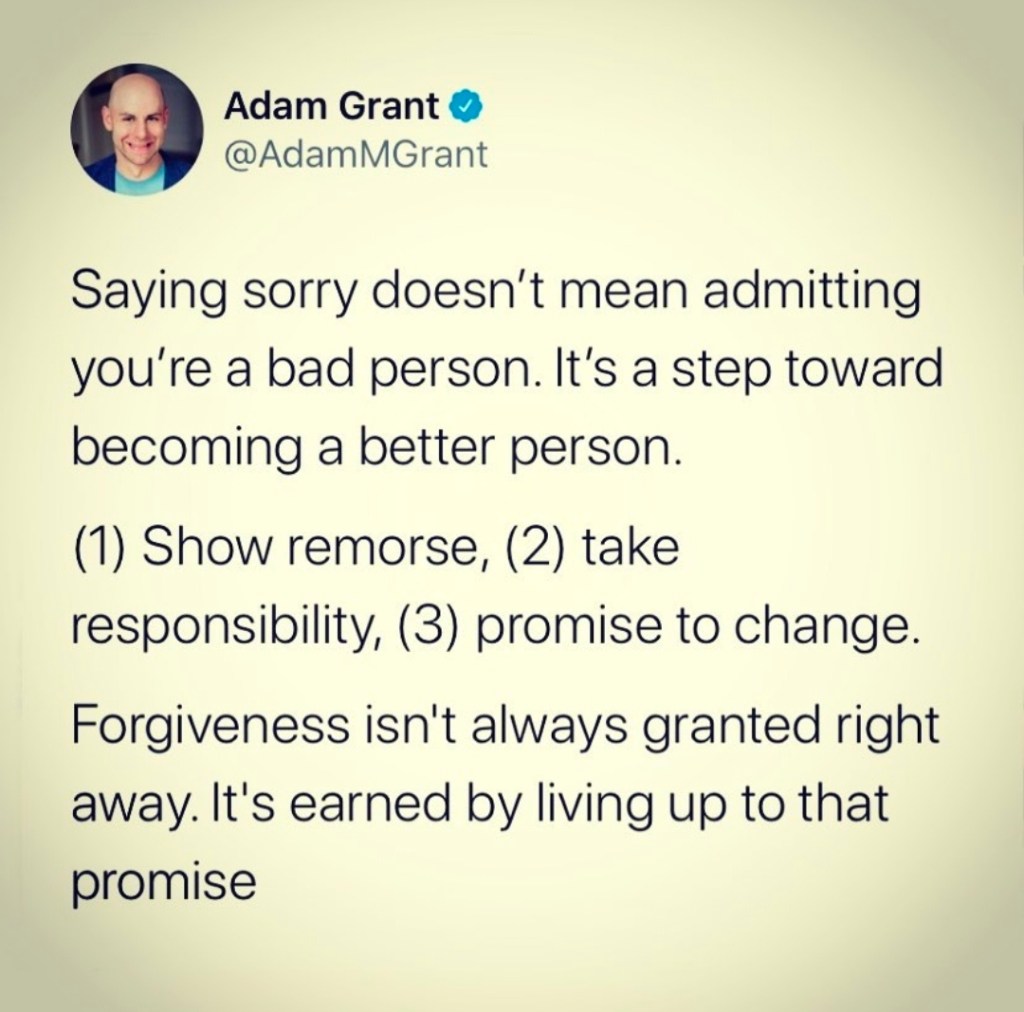
I think where apologies used to get it wrong is that repairing the relationship wasn’t part of the process.
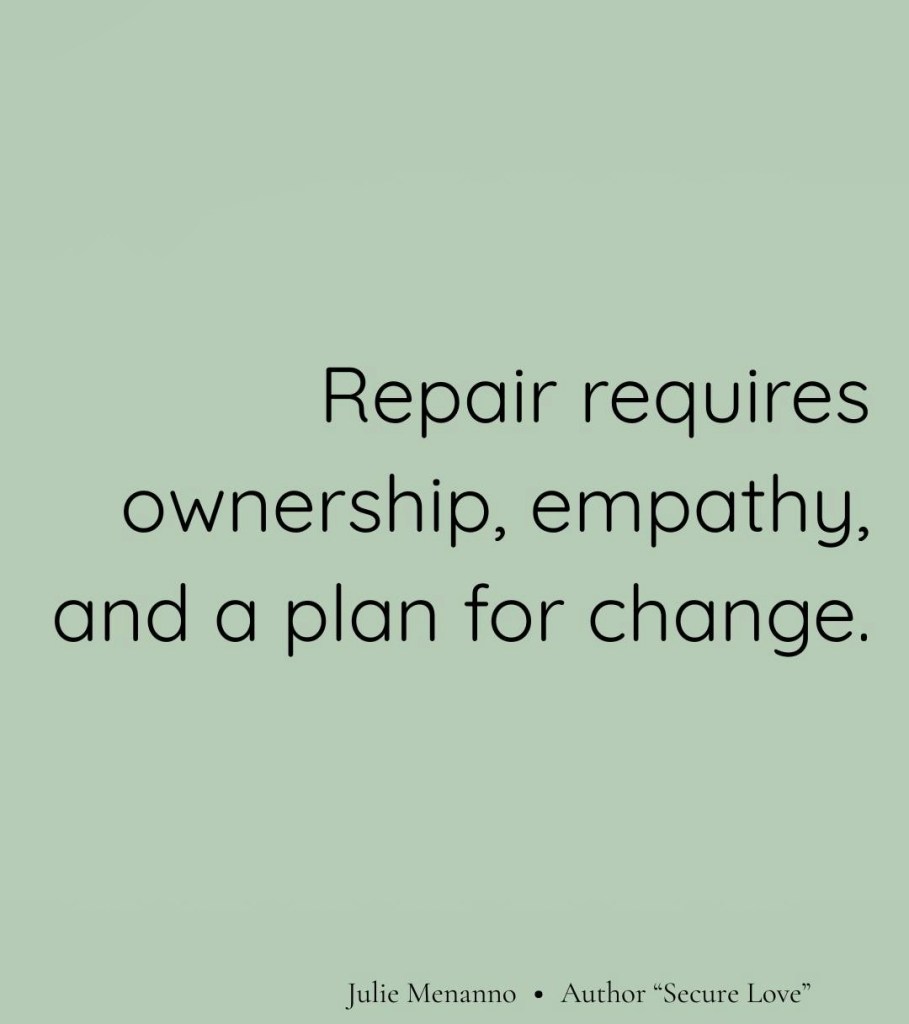
People used to apologize by just saying sorry and not discussing how to keep the situation from happening again. And, if there wasn’t a plan for change, then the same situation would probably happen again and again. Trust cannot be repaired in a relationship when there has been a rupture if there is no commitment to trying to prevent that rupture from happening again.
I heard Adam Grant discuss apologizing last week in a podcast episode, and here is the wording he used in a recent apology:
“I apologize for ___________ [be very specific]. I think the impact of ___________ was ___________, and that was not my intention. There was a clear gap between my intention and my impact. I will do ___________ to make sure I do ___________ differently in the future.”
The key is to be very specific and detailed throughout the entire apology.
While discussing apologizing and good apologies, Adam said that his relationships matter more to him than being right, and I feel the same way. So, if an apology doesn’t involve repairing the relationship, then I don’t believe that the apology can be considered a success.
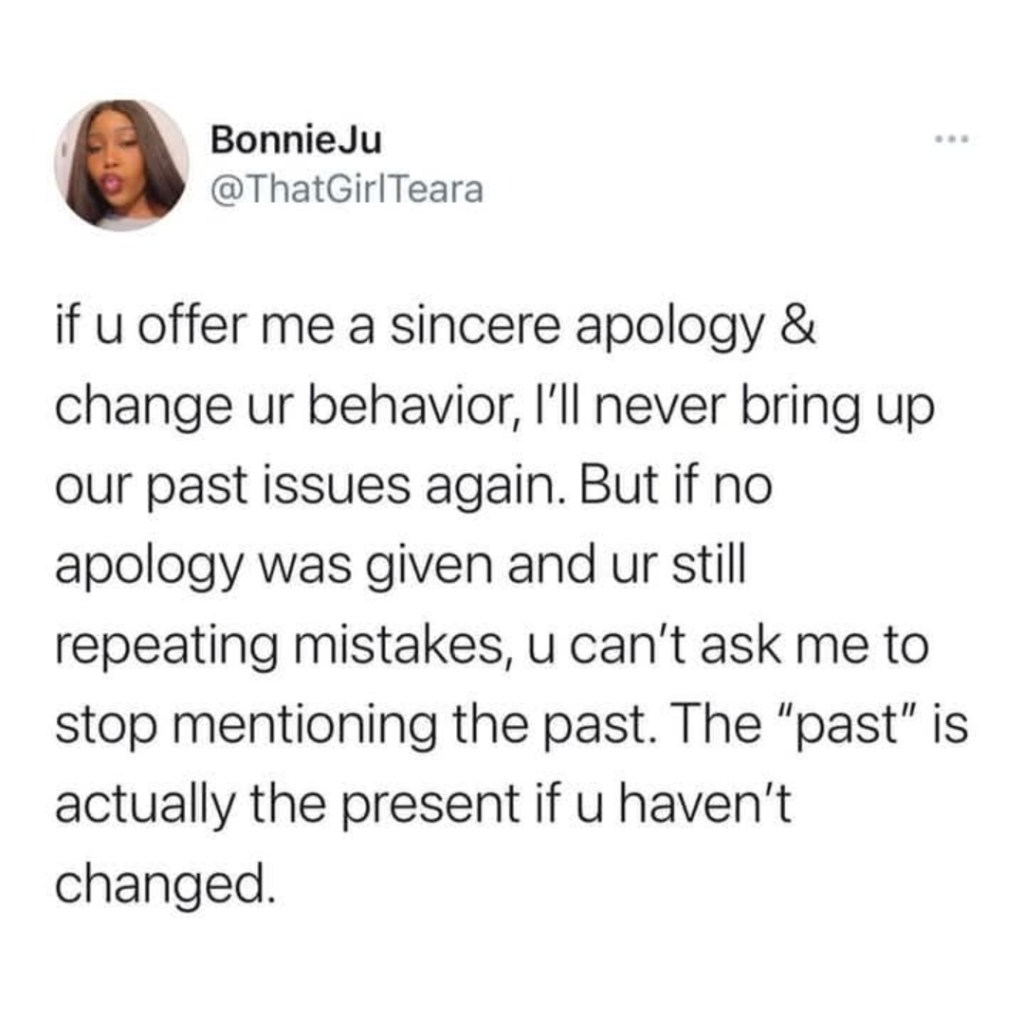
My husband told me the other day that he is impressed with my commitment to both apologizing and good apologies. This meant a lot to me, because like so many people, a good apology did not used to come naturally to me. I knew that I needed to do the work, so it is validating to hear that my work has paid off. I still get it wrong at times, but I am committed to getting it right as much as possible. The bottom line is that I love my husband, and I will do whatever it takes to be the best partner I can be. I don’t want to be one of these people:
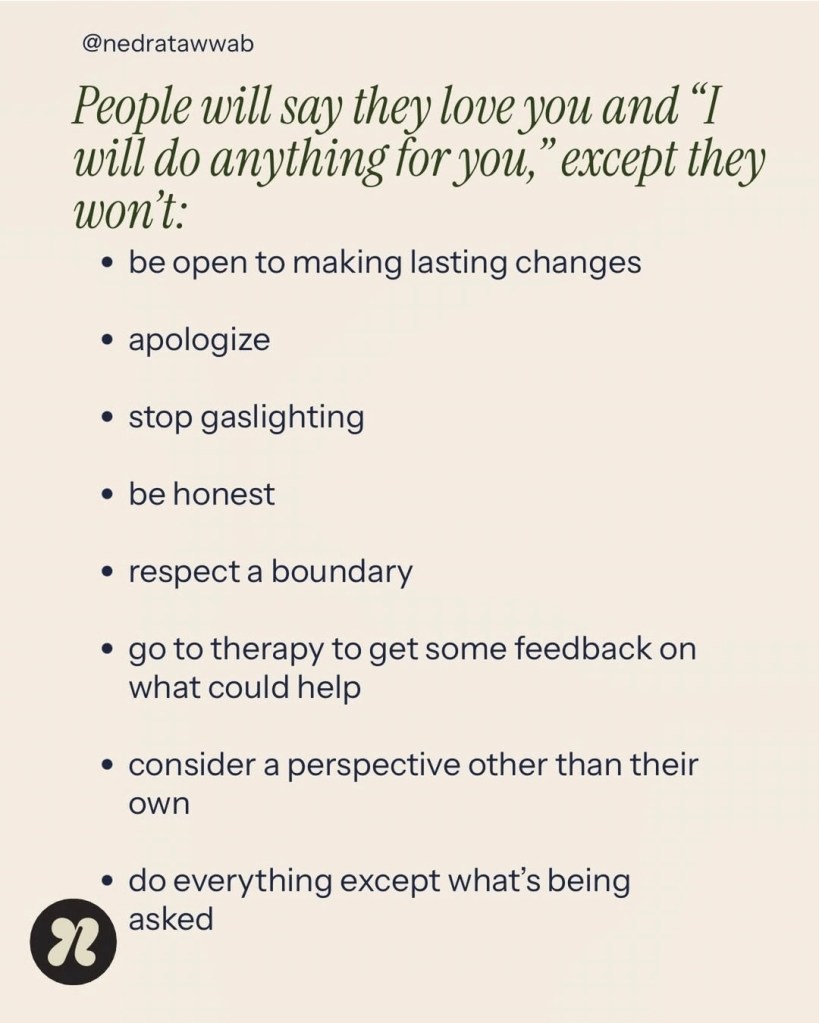
People like the ones described above are not safe or trustworthy people, and I strive to be a safe and trustworthy person. I also prioritize building and maintaining relationships with safe and trustworthy people.
Brutal. Bad apologies. Emotionally immature people.
Beautiful. Good apologies. Repairing relationships. Emotionally mature people. Doing the work to be the best person and partner I can be. Being a safe and trustworthy person.
Just another day of . . . This Brutiful Life: The Brutal & Beautiful Moments of My Life.
 This Brutiful Life