
In my Intergenerational Trauma post last week, I wrote about my work as a high school Gifted Education teacher. I spent a majority of my time in that role working with individual students and their families, so I had a unique lens through which to view family systems. I have been asked many times over the years about the benefits and challenges of working so closely with individual students and their families. The most common question I get asked is about the different types of families with which I interacted. Given the connection between intergenerational trauma and family systems, now seems like a good time to provide some insight into my experience with different types of families. As I have stated many times, I am not a trained mental health professional, but I can definitely speak from my experience as a teacher who learned about family systems and worked very closely with high school counselors, psychologists, and social workers for the benefit of individual students and their families.
As a Gifted Education teacher, I had students for all 4 years of their high school experience, so I got to know them extremely well. One of my superpowers is seeing patterns, so I often knew what each student needed from me before they knew it for themselves. Since I had about 90 meetings with individual students and their families each school year, I was also able to see the patterns in family dynamics. Most of the families I worked with could be classified into one of three categories:
Category 1 — Families whose members were self-aware, emotionally safe, accountable to themselves and each other, and good at repairing ruptures. These families typically had at least one parent (and usually both) who exhibited a high level of emotional intelligence and maturity. In addition, they were frequently open with me about seeking help from trained professionals as needed.
Category 2 — Families whose members exhibited unhealthy traits, but who were transparent about their struggles and were either receiving help, or willing to receive help, from trained professionals.
Category 3 — Families with at least one member who was overly concerned with their family’s image, unwilling to acknowledge unhealthy family dynamics, and unwilling to seek help from trained professionals.
I worked with some truly wonderful families that fit into Categories 1 and 2 during this period of time in my life. However, it is probably not very surprising that I also worked with quite a few families that fit into Category 3. What I found to be common in dysfunctional families is that each family member is “assigned” a role (or roles) to play to keep the family system operating as it has always operated. Here is a short video of Glennon Doyle explaining this concept with both truth and humor:
One of the most challenging types of families I experienced in my role as a high school Gifted Education teacher was the family with a narcissistic parent. One parent exhibited narcissistic tendencies while the other parent was the enabler. The enabling parent would be viewed as the “good” parent and would make excuses for the narcissistic parent in order to avoid addressing the problem(s). The enabling parent was usually very codependent with the narcissistic parent. The most common roles for the children in narcissistic families were: Golden Child, Scapegoat, and Lost Child. [Side Note: There are more roles, but these three roles were most prevalent in my experience.] If there were only 2 siblings in a narcissistic family, I commonly saw the roles of Golden Child and Scapegoat. Below is a visual representation of what I am describing. [Disregard the gender depictions of each role. In my experience, roles can be “assigned” to any gender.]
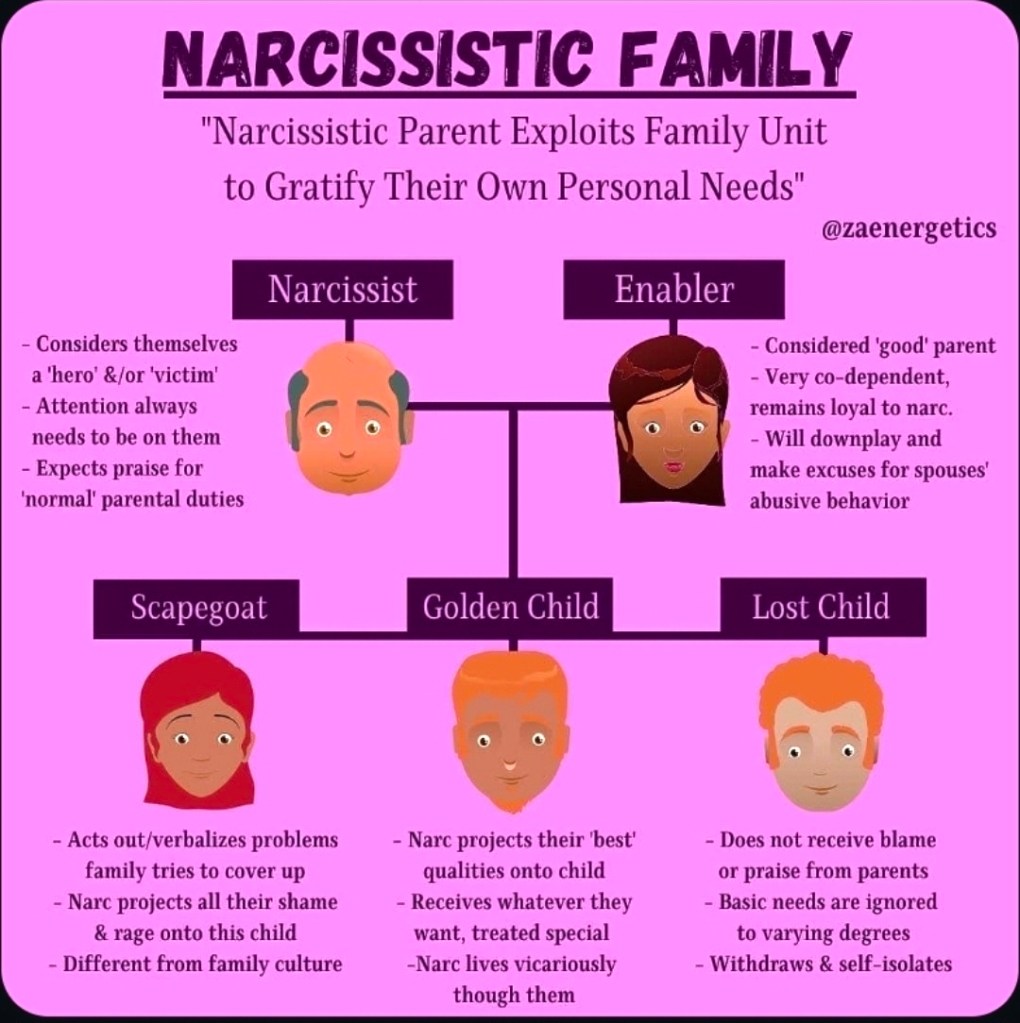
If a student of mine was the Golden Child, they were treated as the favorite child. They could do no wrong and were given special treatment over the other children in the family. From the outside, this role seemed like the best role, but it came with its own set of hardships. These students often had high levels of anxiety, because they knew, either consciously or subconsciously, that they could be removed from the role of Golden Child at any moment. They were only safe so long as they complied and protected the family image. Their worth was tied to performance, not authenticity. The moment they stepped out of line and were no longer the “favorite” child, they put themselves at risk of switching roles with the Scapegoat.
If a student of mine was the Scapegoat, they were habitually blamed by the family for everything that was wrong with the family. However, they were usually the healthiest member of the family from a psychological standpoint. The Scapegoat was typically sensitive, honest, strong-willed, emotionally aware, and less willing to pretend things were fine. They were usually the family member who was speaking up about the family dysfunction. When the rest of the family didn’t want to address the dysfunction, the family blamed the Scapegoat for all the problems in order to keep the status quo.
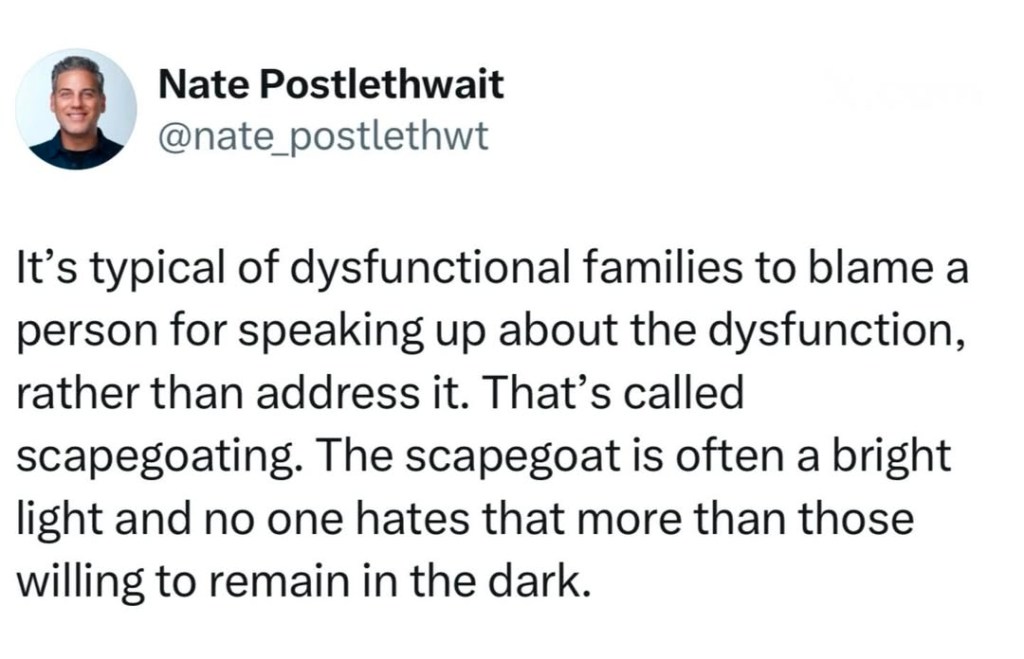
[Side Note: Scapegoating is a tactic used by all types of systems, not just family systems. For example, some people in this country are currently blaming immigrants for problems that are *not* caused by immigrants in order to keep the focus off of the real issues.]
The Scapegoat is typically the family member who distances themselves from the rest of the family in order to break the cycle. Unless the entire family is willing to address the real issues, the Scapegoat has no other choice but to distance themselves from the family dysfunction in order to maintain psychological health. Similar to Glennon Doyle’s social media post above, staying whole — refusing to abandon themselves for the sake of others — is the work of their lives.
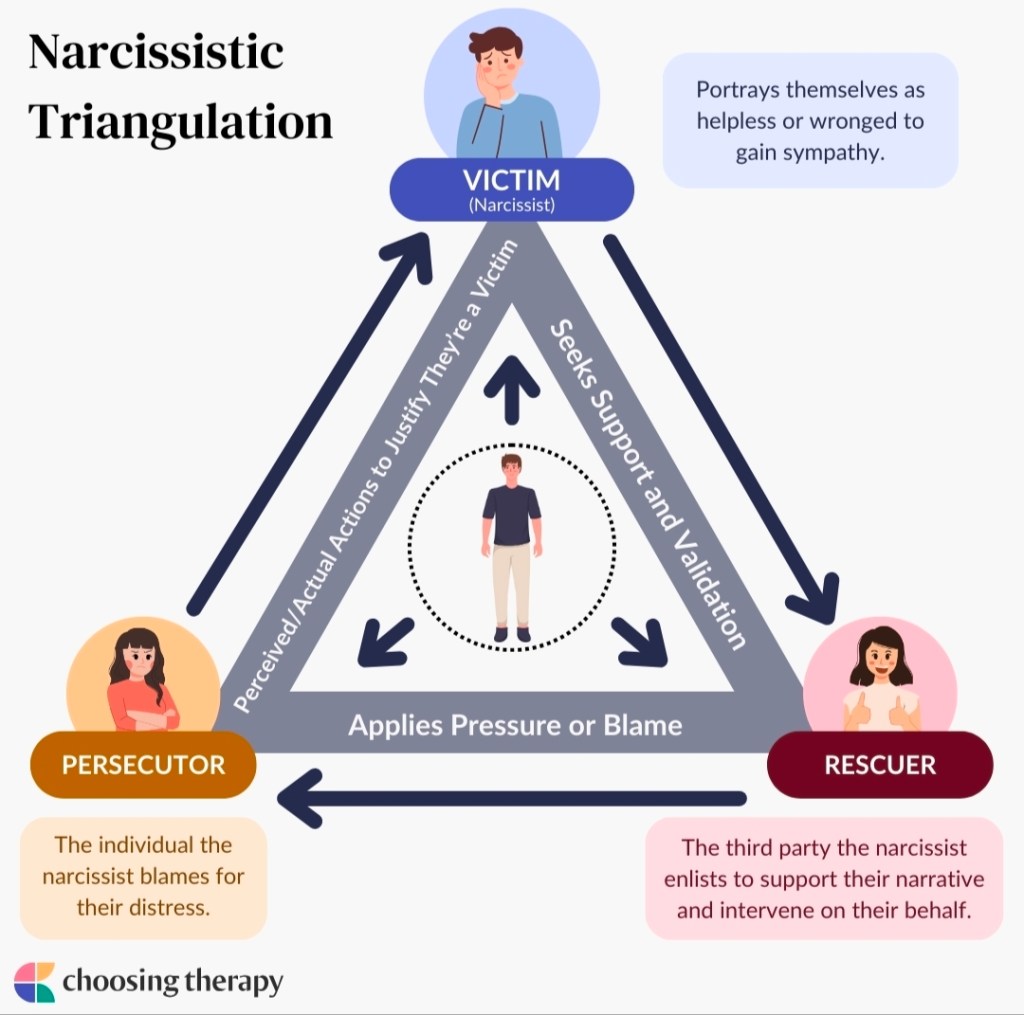
There were also times during my career in education when I would see a parent use triangulation as a tactic to drive a wedge between siblings. Triangulation is involving a third person in a two-person conflict. In the case of narcissistic families, one (or both) of the parents would enlist the Golden Child to come to their defense and bully the Scapegoat into falling back in line with the “assigned” family roles to feed the illusion that everything was great. Here is a visual representation of triangulation:
While it was definitely a challenge to work with the various types of families that fit into Category 3, most of the memories I have from my time as a teacher are wonderful memories of the families that fit into Categories 1 and 2. There were so many families that were going about things in the right way. They weren’t perfect, but they were putting in the work to be as healthy as possible.
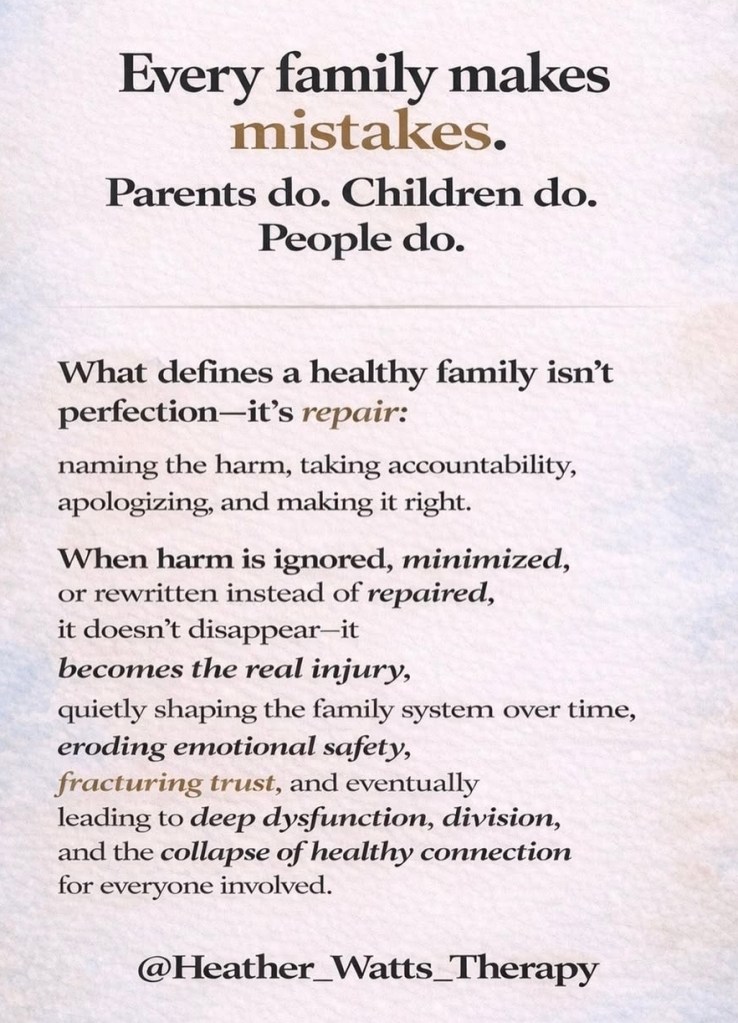
In my post from last week, I wrote about how trauma can be passed down to future generations, but I also wrote about how healing can be passed down to future generations. If the entire family is willing to learn, grow, and repair, healing is possible.
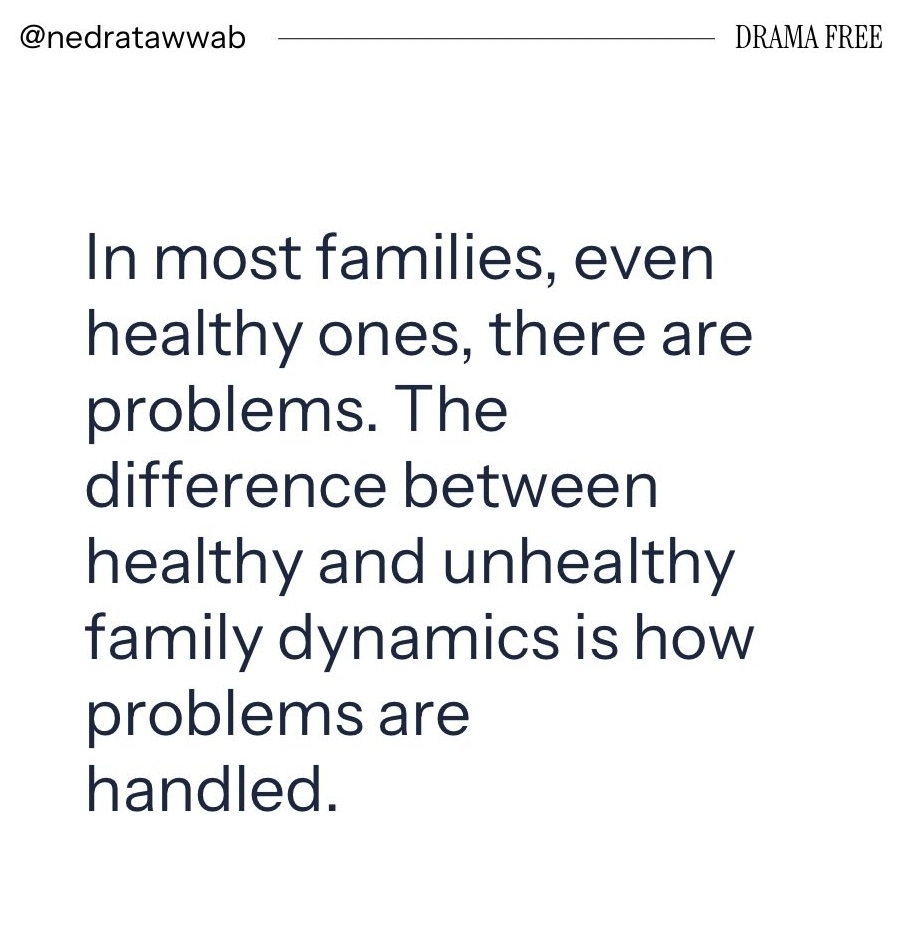
After working with a variety of families and experiencing family dynamics from many different perspectives, I believe that doing the work to build/become an emotionally healthy family is the best gift a parent can give to their children. Increasing both emotional intelligence and emotional maturity as a family is difficult and takes resilience, but it is worth the effort. The result is being able to pass down familial healing — emotional intelligence, emotional maturity, and nervous system regulation — instead of familial trauma.
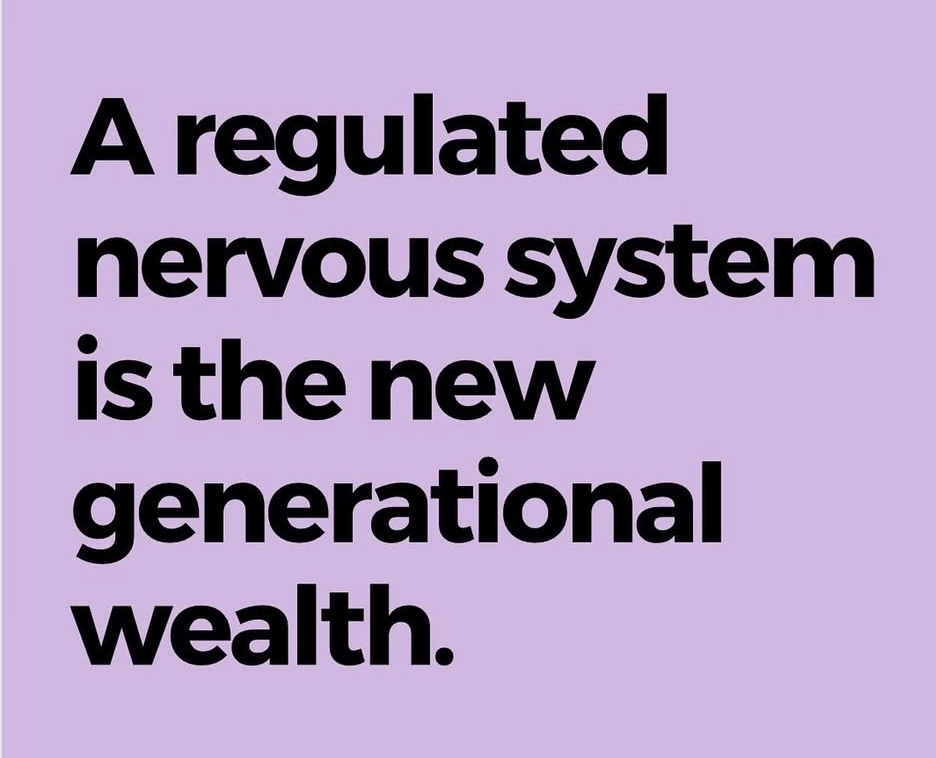
(image: @the.holistic.psychologist on IG)
When every member of a family is willing and able to do the work, the sky is the limit in terms of emotional health and familial healing. I witnessed this happen at various times throughout my teaching career, and it was such a blessing to witness. It taught me so much about emotional health and family dynamics, and I will take that knowledge with me for the rest of my life.
Brutal. Families with at least one family member who is overly concerned with their family’s image, unwilling to acknowledge unhealthy family dynamics, and unwilling to seek help from trained professionals.
Beautiful. Entire families putting in the work to be as healthy as possible. Passing down familial healing — emotional intelligence, emotional maturity, and nervous system regulation — instead of familial trauma.
Just another day of . . . This Brutiful Life: The Brutal & Beautiful Moments of My Life.

