

The topic of mental health has been a passion of mine for as long as I can remember. I spent most of my time as a high school Gifted Education teacher working with individual students and their families, and emotional/mental health was one area of emphasis. I had approximately 90 meetings with individual students and their families each school year, so I had a unique lens through which to view individual, familial, and collective trauma. My passion for learning about mental health, family dynamics, and intergenerational trauma has increased throughout the last 20+ years, and this passion has helped me tremendously as I have navigated my own health journey. I am far from a trained mental health professional, but I have a relatively solid understanding of the basics.
Intergenerational trauma is one area of mental health that has become more understood by the general public.
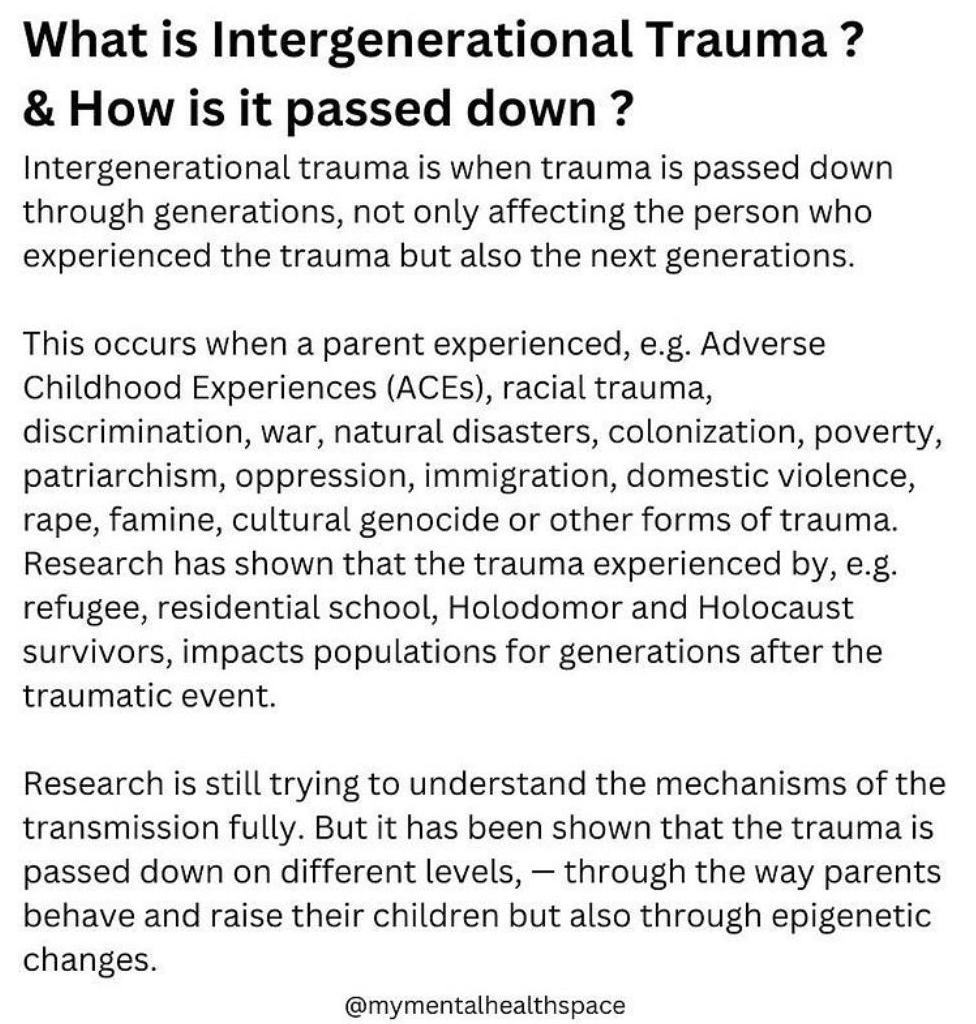
The epigenetics part of intergenerational trauma has been an especially hot topic. One experiment performed on mice showed that future generations of mice were scared of a specific stimulus without having any previous direct experience with the stimulus. They were scared solely based on fear that had been passed down from previous generations of mice who had direct experience with the specific stimulus. The current consensus is that there are psychological, behavioral, and biological effects of trauma that can be passed down to future generations.
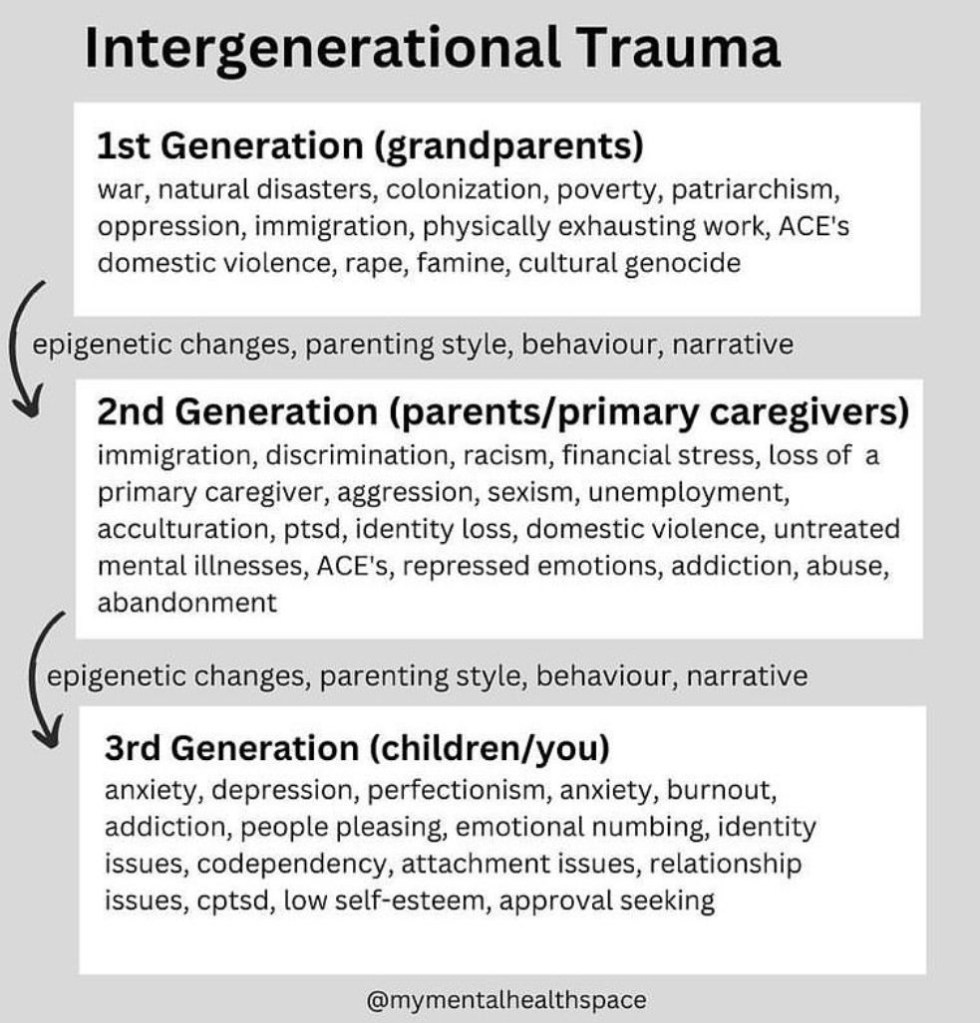
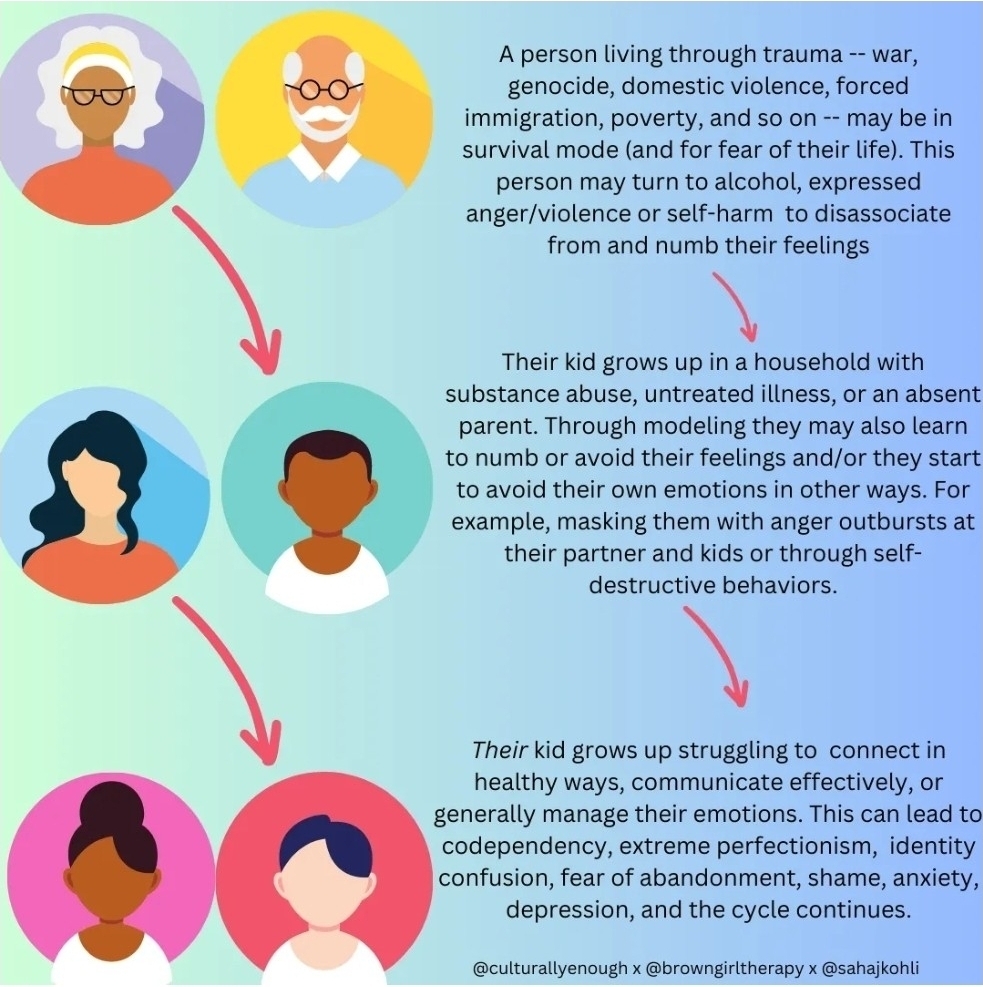
Here are two images that further describe intergenerational trauma:
This is why I keep thinking about both the immediate and long-term impact of what is currently happening in our country. The trauma that people are experiencing individually and collectively will be felt for generations to come.
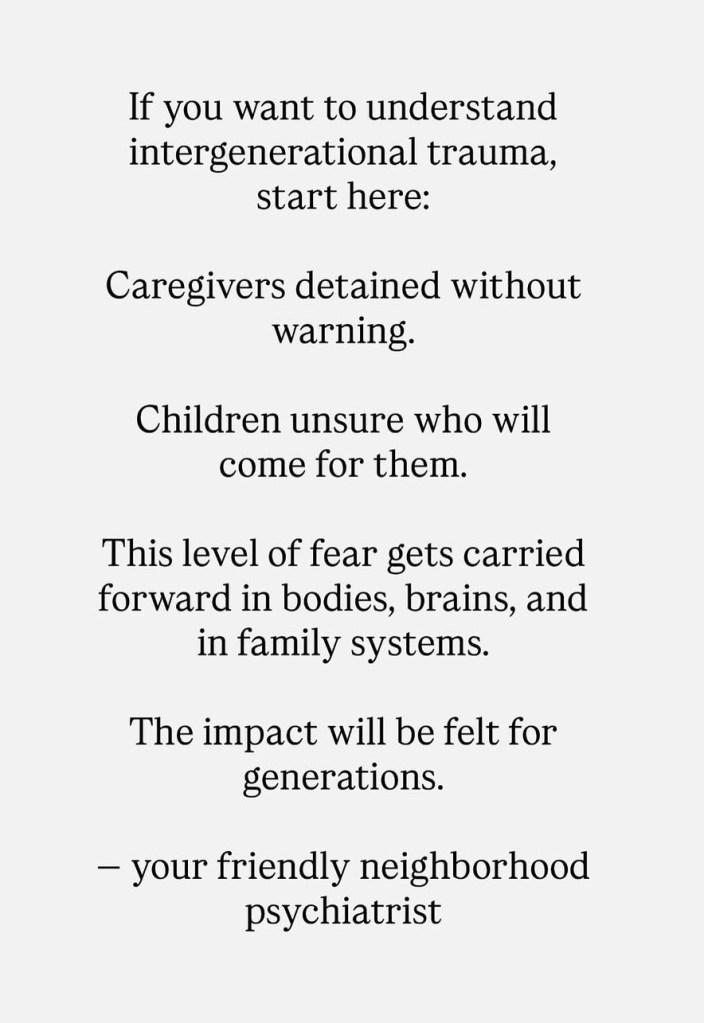
(image: Pooja Lakshmin, MD on IG)
It is important to note that extreme situations, like what we are experiencing right now as a country, and less extreme situations can both cause trauma. In addition, trauma can be experienced on a country/community level (war, natural disasters, etc.), but it can also be experienced on a familial level (untreated mental illness, addiction, physical or emotional neglect/abandonment, etc.). And, regardless of the source of the trauma, the effects can be passed down to future generations if the trauma is not addressed and healed.
The good news is that a person can heal from trauma with the right assistance and support. There is not a day that goes by that I don’t wish our country had more help and support for people who have experienced trauma. And, that wish has only intensified in the last few days. I personally know how much of a privilege it is to have trauma support from a trained professional, and I wish trauma support from a trained professional was accessible to everyone. When one person heals, it creates a ripple effect that can also be felt for generations to come.
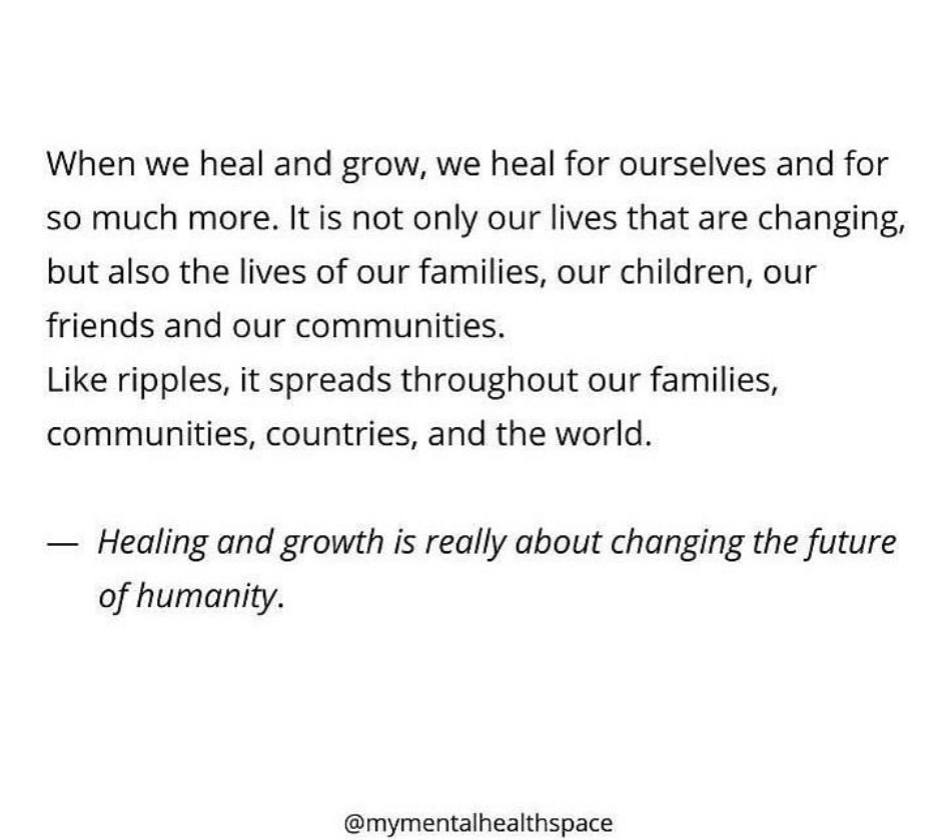
Each generation needs to put in the work to heal so that future generations don’t feel the effects of trauma from previous generations. However, people need the appropriate help and support for that to be possible. My hope is that we all understand the amount of healing that is currently needed in our country, and we will all push for better supports to be put in place for that to happen. If we don’t acknowledge this situation as a country, we are failing ourselves and each other.
[Side Note: As a reminder, this is my blog and, therefore, my opinion. I have a strong moral compass, and where I stand is not up for debate. If you disagree, feel free to just keep moving along.]
Brutal. The truth about what is currently happening in our country. Intergenerational trauma.
Beautiful. Standing on the right side of history. Doing what I can, where I am, with the resources available to me. Healing my trauma for myself and the future of humanity.
Just another day of . . . This Brutiful Life: The Brutal & Beautiful Moments of My Life.
 This Brutiful Life