

One of the many things I have learned in the last 20+ years is that most people are not good at providing support to others who are going through difficult times. I don’t believe that this is because people don’t care. I believe this is because we have never been taught, as a society, how to best support others. As I have mentioned many times, most people think that supporting others involves providing Unsolicited Advice instead of just sitting with others and listening to them. Holding space for people who are going through difficult times can be hard for a lot of people. It can be uncomfortable watching the people we care about experience difficult emotions and feelings, so instead of sitting in our own discomfort, we provide them with “outstanding” advice to make the situation all better. We try to “fix” the situation as a way to regulate our own nervous systems and bring ourselves back to being more comfortable. [By the way, this happens to the best of us. Even our amazing therapist, who is *excellent* at holding space for all emotions and feelings, occasionally struggles to fight the urge to “fix” the physical part of my health situation. She knows that she can’t “fix” it, but she cares deeply and really wants to be able to fix it, so she will start to say something before she stops herself and goes back to her area of expertise in the emotional/mental health realm. And, she is a trained mental health professional who is fantastic at her job, so just imagine how the rest of us are doing at supporting without providing unsolicited advice. 🤣]
The second mistake many people make while trying to support others is making the situation all about themselves. They think that providing the person who is going through the difficult time with a story about how they themselves have also experienced something similar (aka: making it about themselves) is what is needed. We have all been there. We are sharing our experience with someone, and then all of a sudden, the other person turns the conversation into a story about their own “similar” experience. There is nothing that shuts someone who is going through a difficult time down more than making the interaction about ourselves versus staying focused on the person who is going through the difficult time.
Another way people who are trying to support others make the situation about themselves is by dumping in instead of dumping out. In my I Just Keep Trying blog post two weeks ago, I wrote about the Los Angeles Times bestselling book that was recommended to me by our therapist, In Shock: My Journey from Death to Recovery and the Redemptive Power of Hope, by Dr. Rana Awdish. The book is written by a critical care doctor who had a near-death medical crisis herself, and it gives the reader the unique perspective of a medically-trained critical care patient. I think the book should be required reading for all medical practitioners. One section of the book reiterated the “Comfort In, Dump Out” concept that I ran across many years ago. The concept originated from a LA Times article written by Susan Silk and Barry Goldman in 2013. The concept involves drawing a circle and putting the people who are directly impacted by the difficult life event in the middle of the circle. Then, drawing a circle surrounding that original circle and including the people who are also impacted, but not impacted as much as the people in the original circle, and so on. Here is a visual representation of the concept:
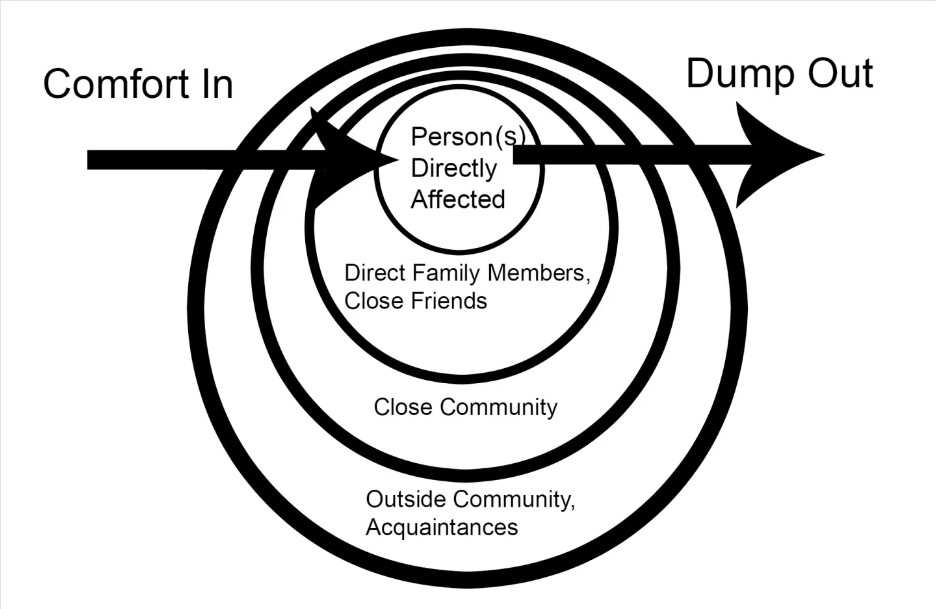
(credit: unknown)
In my current situation, my husband and I would be in the original circle. Certain family members and close friends would be in the next circle. Then, other family members and friends. Acquaintances and colleagues in the next circle . . . and so on.
The rest of the “Dump In, Comfort Out” concept goes like this: The person/people in the original circle can dump out to anyone in their lives (in terms of venting about the life event). And, the people in outer circles can only dump (vent) out about this life event to bigger circles versus dumping in to smaller circles. Each circle can vent about the life event to a circle of people who are further away from the life event, but they shouldn’t vent to people who are closer to the life event. People in the outer circles should only provide comfort in. Otherwise, the people who are dealing with the difficult life event feel pressured to comfort the people who are less affected in the outer/bigger circles, and that is the opposite of support. Don’t be the person who adds more to the plates of the people who are directly impacted by the life event by asking them to comfort you about their own life event. One of the biggest mistakes someone can make while trying to support others is to dump (vent) in. Don’t vent about how much the life event is impacting you to the people who are more directly impacted. As long as you are not crossing any boundaries, you can vent all you want about the life event, but you need to make sure you are venting in the right direction. [Keep in mind, there is a difference between venting about how a situation is impacting you and talking about people behind their backs. Being a person of integrity is important.] Comfort is what needs to go inward towards the people who are impacted the most by the life event.
It is important to note that each person and life event has its own set of circles. For example, if you are one of my supportive people for my health situation, you can still dump/vent about your own difficult life events to me. You are now in the original circle of your own life event and should dump/vent out to your support system (including me). Even people living alongside difficult life events still want to be part of the support system for other people. Just don’t dump/vent *in* on someone else’s life event.
Supporting people who are going through difficult times is not something that we are born knowing how to do. And, most of us are never taught how to do it well, because the expectation is that we will just know how to do it. As a result, we usually do at least one of the three mistakes described in this blog post (and maybe all three). If we want to do a great job of supporting others, we have to spend time learning how to do it well. We also need self-awareness. A person will likely continue to be horrible at supporting others unless they are aware of what they need to do differently. And, finally, people will only get better at supporting others if they spend time practicing how to do it differently. We aren’t usually successful at a new skill the first time we do it. If we increase our knowledge on a topic, but we don’t actually implement that knowledge into our daily lives, then nothing will change. We have to be willing to fail and then keep trying in order for our skills to improve.
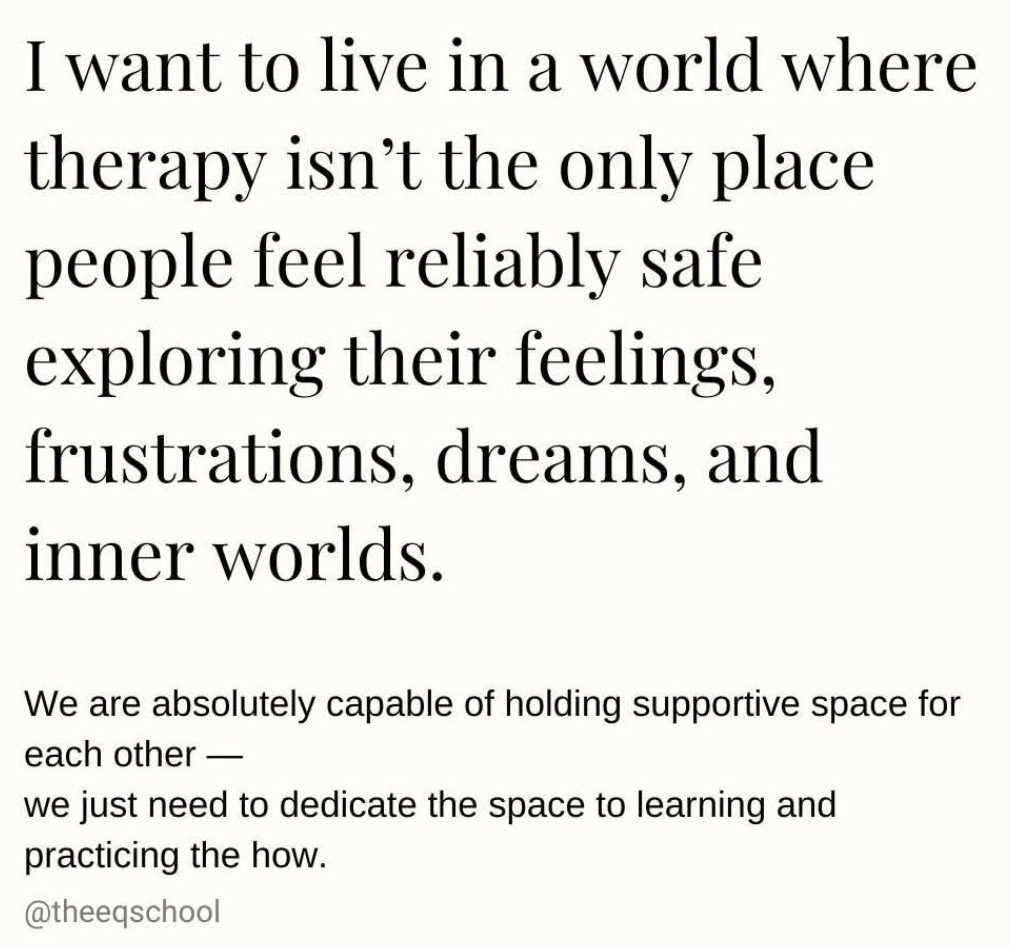
Fortunately, I have a small group of people in my life who are lifelong learners and actively seek opportunities to become better at supporting others through difficult times. They read my blog posts about how to best support us, and then they try to actually do it. If they need a refresher, they go back and review the posts on my Support page for guidance. They hold themselves accountable for being part of our support system. They aren’t afraid to fail and to try again. These are my people, and I am immensely grateful for them. ❤️
Brutal. Not being born with the knowledge and skills for how to best support people who are going through difficult times.
Beautiful. Knowing that we are not born with the knowledge and skills for how to best support people who are going through difficult times, and doing the work to improve in this area. My supportive people.
Just another day of . . . This Brutiful Life: The Brutal & Beautiful Moments of My Life.
 This Brutiful Life