

I am always trying to learn as much as I can about myself and the world around me, so I have been doing an exploration into unsolicited advice over the last few years. It is a topic that is fascinating to me since my husband and I are on the receiving end of quite a bit of unsolicited advice. I have put in the work to learn more about unsolicited advice and why it is so common. I have addressed the topic on numerous occasions (e.g., Am I Listening or Problem Solving?), but the more I share my health journey, the more this topic is highlighted. Recent situations involving my husband and I receiving unsolicited advice have reminded me of what I have learned over the last few years.
Like everyone else, I have been in situations where I have given unsolicited advice, and I am personally trying to rid myself of this tendency as much as possible. I slip up at times, but I have been able to catch myself in the act more often than not over the last few years. When I catch myself doing it, I try to correct my statement right then and there.
About a month ago, I found myself saying to a friend, “Make sure you _______. I am sorry. I shouldn’t have said that. Let me try again. Here is what I want to say instead: That really sucks. I am sorry you are dealing with that. What does support look like for you right now?” My friend started laughing, because she knew that I caught myself giving unsolicited advice instead of just sitting with her in her pain. The more that I have paid attention to the tendency to give unsolicited advice in my own life over the last few years, the better I have gotten at providing support instead.
During my exploration into unsolicited advice over the last few years, I have learned that there are a variety of reasons for why we give unsolicited advice. Here are just a few of those reasons:
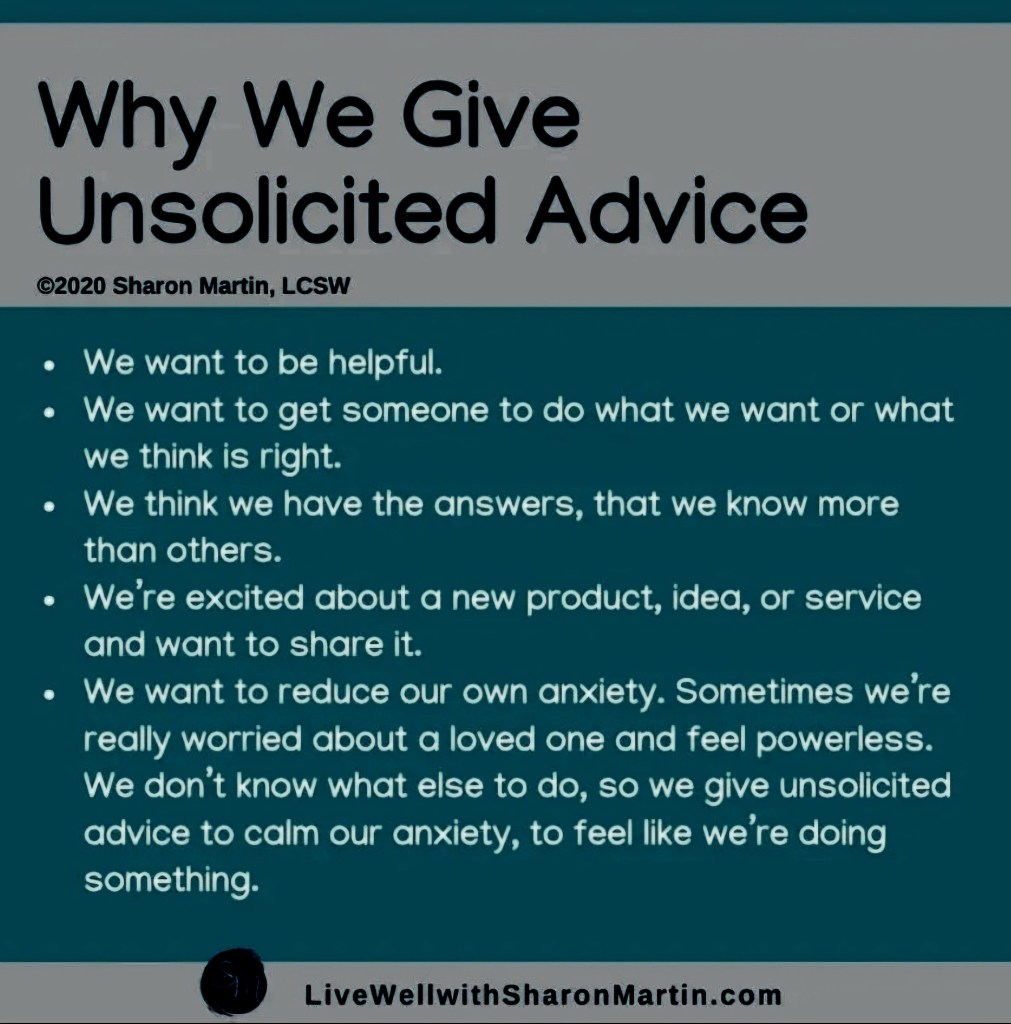
The last reason seems to be accurate for a lot of people based on what I have learned from my own experiences with unsolicited advice, from others’ experiences, and also from licensed, trained professionals. It is uncomfortable for us to watch the people we love in pain and/or distress, so in order to regulate our own nervous systems and get back to being more comfortable, we give unsolicited advice. We feel better — are soothing ourselves — by giving the other person our advice. It is not about the other person at all. It is about our own need to regulate our nervous systems and be less uncomfortable.
In reviewing the list above, a couple of the reasons listed there are seemingly good reasons to provide unsolicited advice. However, even if the intentions for giving unsolicited advice are good, the impact is usually not good. And, impact > intent. The impact on the receiving person is more important than the intention of the person giving the unsolicited advice. The impact usually involves the person on the receiving end feeling criticized.
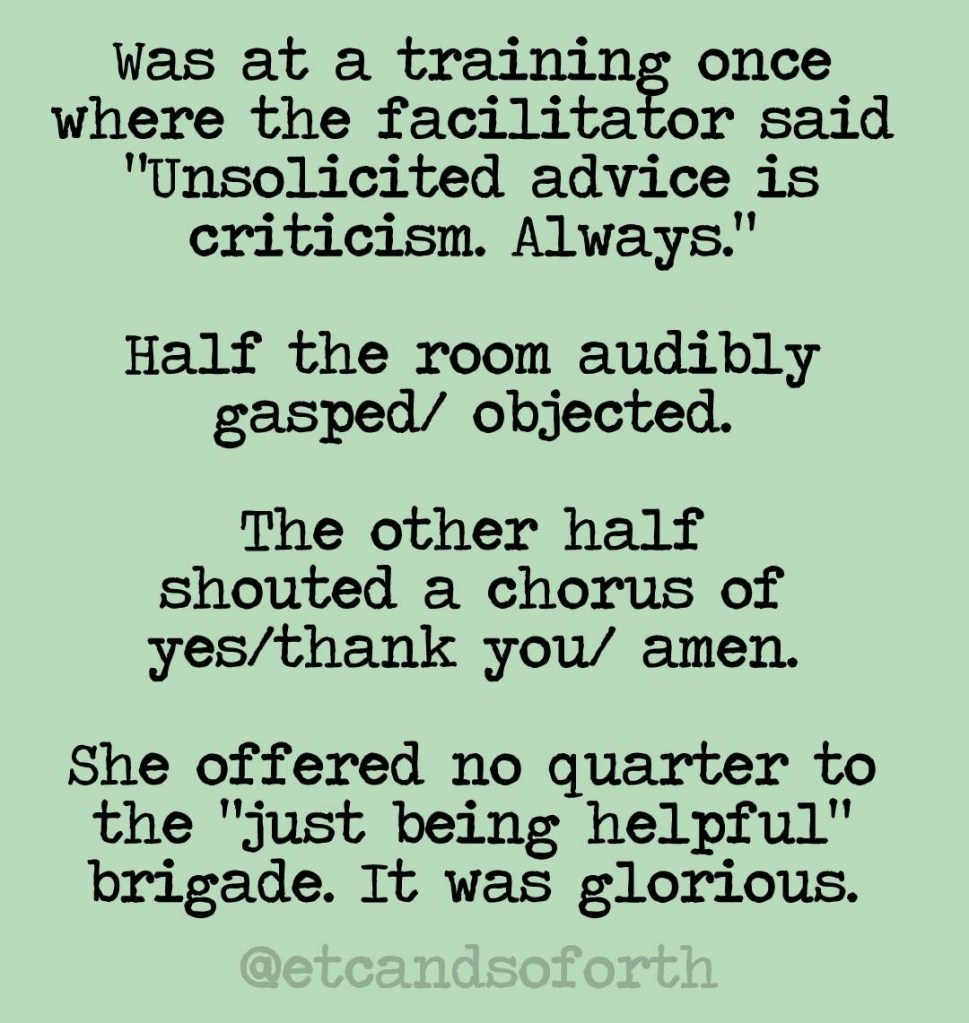
Based on my own experiences with receiving unsolicited advice, this is true. What are we unknowingly implying when we give unsolicited advice? The impression we are giving, whether intended or not, is that we believe the other person can’t do something “right” without our assistance. We are subconsciously sending the message that we don’t think they are capable of thinking about or doing something on their own, so we are going to tell them what to think or do.
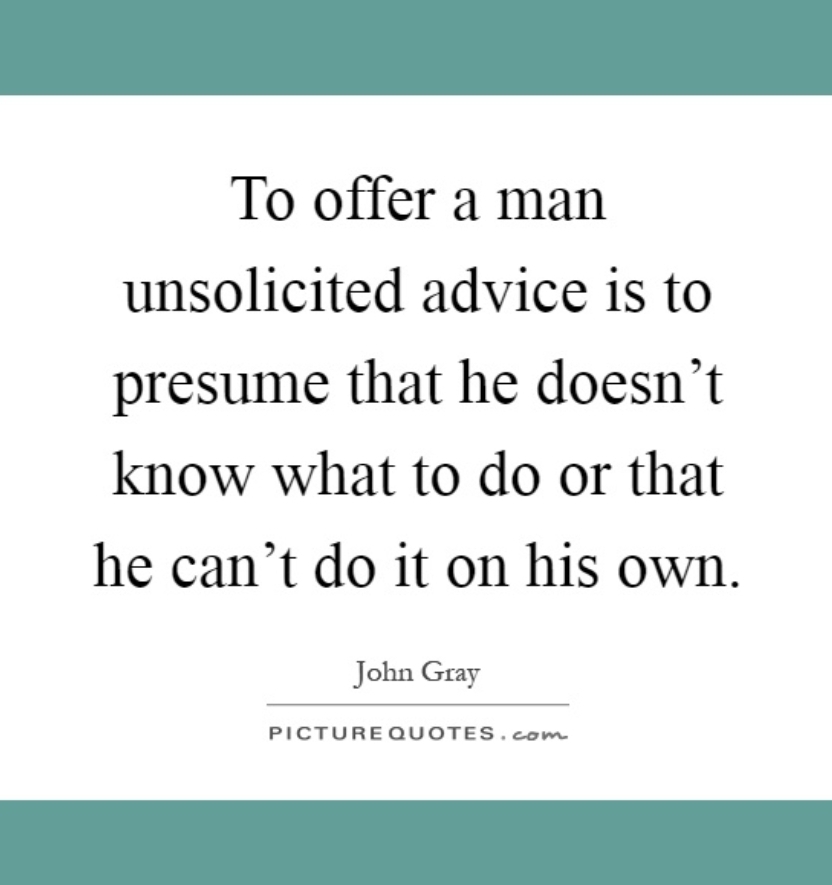
This topic is sometimes tricky for me, because others frequently ask me for advice. The key, though, is that the people in these situations are asking me for advice. I am not giving them advice that is unsolicited.
When I notice the urge to give unsolicited advice, I ask myself some of the following questions:
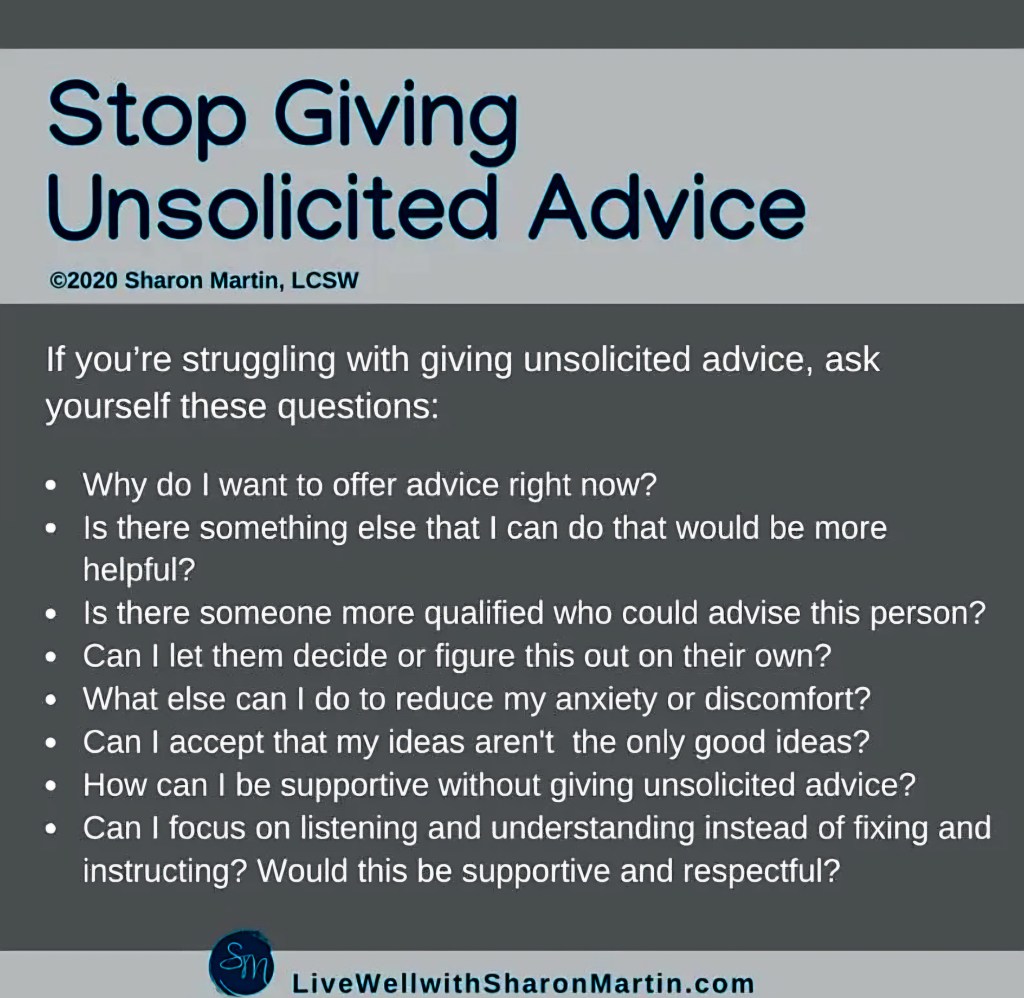
I regularly review the image below for reminders of what can be said to someone who needs my support instead of my unsolicited advice. Some of these suggestions can be used in place of unsolicited advice, while others are just good suggestions for general use.
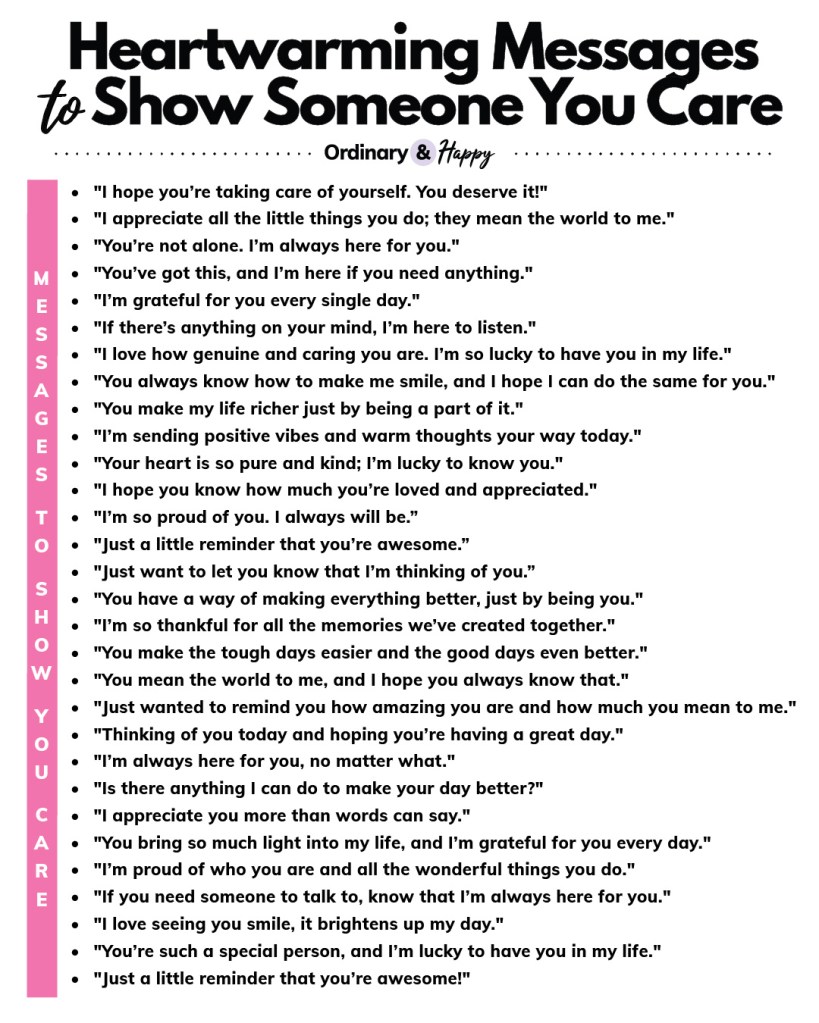
What my exploration into unsolicited advice has taught me over the last few years is that I should only offer advice or solutions when requested. I should not presume to know the details about someone else’s situation. I should not presume to know their situation better than they do themselves. I should listen to understand instead of listening to solve a problem. I should validate their feelings. I should empathize with them. I should provide them with the support that they want and deserve.
If unsolicited advice starts coming out of my mouth, I make a concerted effort to focus on this reminder:

(credit: unknown)
It always stops me in my tracks and makes me laugh out loud. It is such good (unsolicited) advice. 🤣
Brutal. Unsolicited advice.
Beautiful. Learning as much as I can about myself and the world around me. My exploration into unsolicited advice. Learning how to best support others. Drinking water and minding my own business.
Just another day of . . . This Brutiful Life: The Brutal & Beautiful Moments of My Life.
 This Brutiful Life