
I would love for someone to be able to provide me with some certainty regarding my health, but I am well aware that certainty doesn’t exist. I have to just try to make the next right decision every single minute of my day. When I get super tired of all of the uncertainty, I often wonder what it would be like to have someone be able to tell me exactly what I should do next. 🤣

(credit: unknown)
Physical Health:
There is not much to update in this area. My main doctor and I are still in the process of determining next steps. My immune system is not yet strong enough to fight off the large number of pathogens in my body, so we are in a continual loop of trying to knock down one of the pathogens/issues just enough to move on to the next pathogen/issue before we come back to each pathogen/issue again later. Since we have had to pause the mold toxicity treatment for quite some time now, we may need to go back to some of the pathogens before going back into the mold toxicity treatment protocol. Or, we may decide to try an even milder approach for mold toxicity treatment before going back to the original plan.
I have understood the continual loop situation for a while now. We have to play whack-a-mole until my immune system is less overwhelmed and can begin to fight some of the pathogens on its own. My doctor has indicated that he has seen this situation many times, and I am hoping he continues to have the knowledge and experience required for these types of complicated scenarios.
Emotional Health:
Like I have said many times, there is no set path to follow here. The only option I have is to trust my intuition (and the Universe) and make the best decisions possible in each moment. The tough part is living this plan out in real life. The even tougher part is explaining this concept to others. Imagine being on a 20+ year health journey without any clear answers and having no idea what you are doing. Then, imagine having to explain it to others and facing criticism with each decision made. Do people really think I would choose the most challenging and most expensive path forward if there were any other possible option? If my situation was conventional in any sense of the word, then I wouldn’t be in this situation in the first place.
Not only is this entire situation difficult to explain to others in the general population, it is also difficult to explain to each of my medical practitioners. Obviously, some medical practitioners are more willing to listen, learn, and think outside of the box than others. In addition, most don’t have any training in trauma-informed care. Most don’t have any idea that interactions with them can be traumatizing to their patients due to their lack of care and lack of intention with their words and actions. Frankly, most people in our society don’t understand that trauma includes more than just the “big-T” Trauma that we all think of when we think of trauma, and medical practitioners are no different. Trauma happens in a variety of ways and can be inflicted by a variety of people.
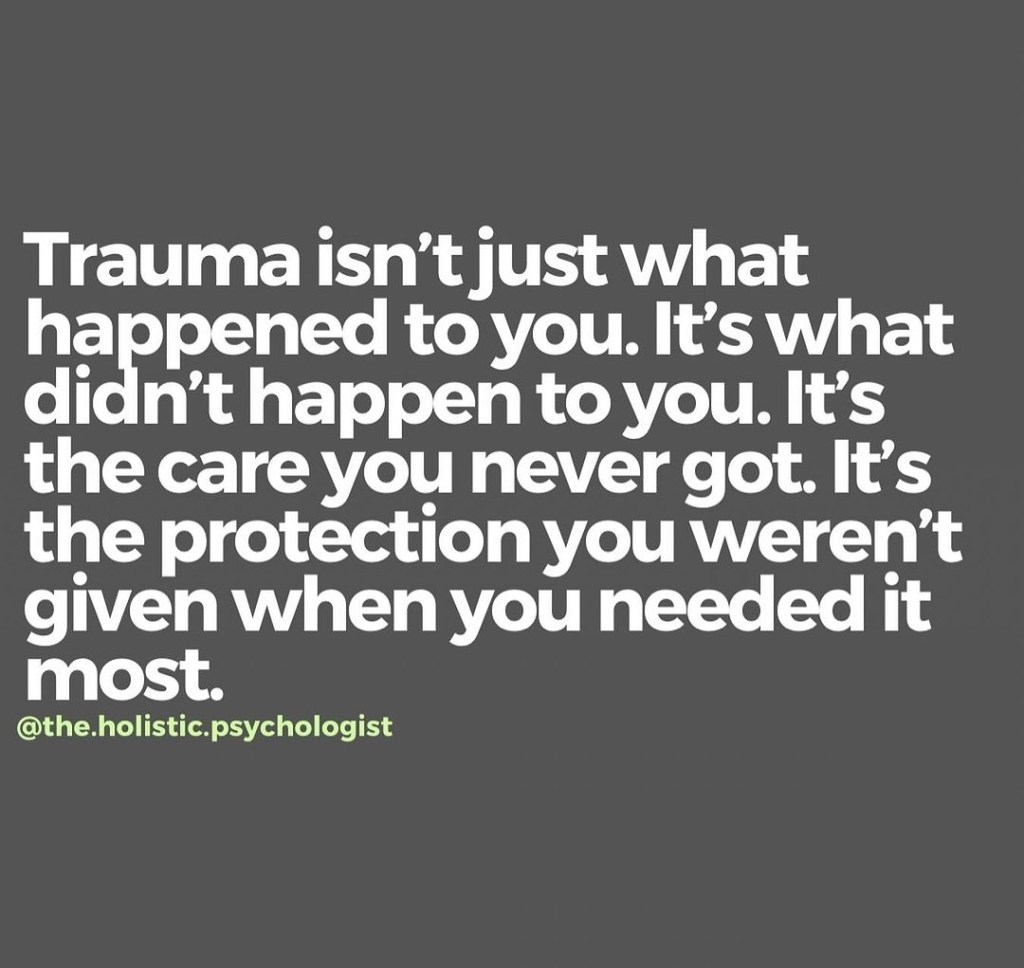
I was telling a friend of mine about an interaction I had last week with one of the many medical practitioners in my life, and my friend said, “I bet you get tired of having to teach medical practitioners how to interact effectively and appropriately with patients.” Yes, I do. It is exhausting, but it is important since the medical community, as a whole, can be traumatizing for patients with chronic illness. (For more details, see my post on Medical Gaslighting from last year.)
I am still in the “Waiting” phase as I wrote about in Pain, Waiting, Rising. If I make it out of this chronic health situation alive, I think that trauma-informed care will be part of my “Rising”. I don’t yet know exactly where my energy will be spent and in what capacity, but I believe that my story could help in some way. According to our therapist, most medical practitioners believe that trauma-informed care solely belongs in the mental health practitioner category. This belief couldn’t be further from the truth, so that tells me that more training is needed for medical practitioners on the topic of trauma. At the very least, medical practitioners should do no harm, and part of doing no harm involves being trauma-aware and providing as much trauma-informed care as possible so that they aren’t a source of trauma for their patients.
Brutal. Uncertainty. Lack of trauma-informed care in the medical community. Having to teach the medical community how to interact effectively and appropriately with patients in the midst of fighting for my own life.
Beautiful. Understanding the importance of teaching the medical community how to interact effectively and appropriately with patients in the midst of fighting for my own life. Using my story to help broaden perspectives. Anticipating the eventual Rising.
Just another day of . . . This Brutiful Life: The Brutal & Beautiful Moments of My Life.
 This Brutiful Life