

[Disclaimer: I am not a doctor, and this post is not medical advice. This post is written with my very basic current level of understanding for my own life. Please take it as such and contact a trained medical professional if you need assistance.]
May is National Lyme Disease Awareness Month, so I thought I would talk about my personal experience in case it helps someone else in some way. I am still learning and may not be saying some of this correctly, but I will do my best.
Why did it take so long to determine that one of the pathogens in my body is Lyme?
According to the CDC standard for Lyme Disease testing and criteria, I do not have Lyme Disease. However, I have many of the blood markers for Lyme Disease. The results for the test that my Naturopath ordered through a private lab in 2016 were very close to meeting the CDC criteria for a positive result for Lyme Disease. When I mean close, I mean that I had a positive immune response in 4 of the bands considered by the CDC to be markers for Lyme Disease. (In 2016, using CDC criteria, a person needed a positive immune response in at least 5 bands to be diagnosed with Lyme Disease.) Two more bands from my results were each 3% away from being positive. If even one of those bands would have shown a 3% higher immune response to the bacteria, then I would have been diagnosed with Lyme Disease at that time using CDC standards. Potential partial answers to my health mystery were missed in 2016 by 3%.
According to my current doctor, the CDC’s standard for testing for Lyme Disease is not very accurate. According to him, there are some estimates out there that the CDC’s testing measures for Lyme Disease may only indicate positive results around 0.08% of the time for people who actually have Lyme Disease. Why is this the case? Testing for Lyme Disease is terribly inaccurate for a multitude of reasons. One reason is that many people don’t present Lyme Disease symptoms for many years. By this time, doctors are testing patients whose bodies are not functioning well and assuming that their immune systems are going to create the correct antibodies to indicate a positive result. Another reason is that Lyme is a stealth infection. The bacteria can reside inside the cells and hide from the immune system. If you are someone who needs a CDC standard diagnosis, then you may miss a Lyme Disease diagnosis.
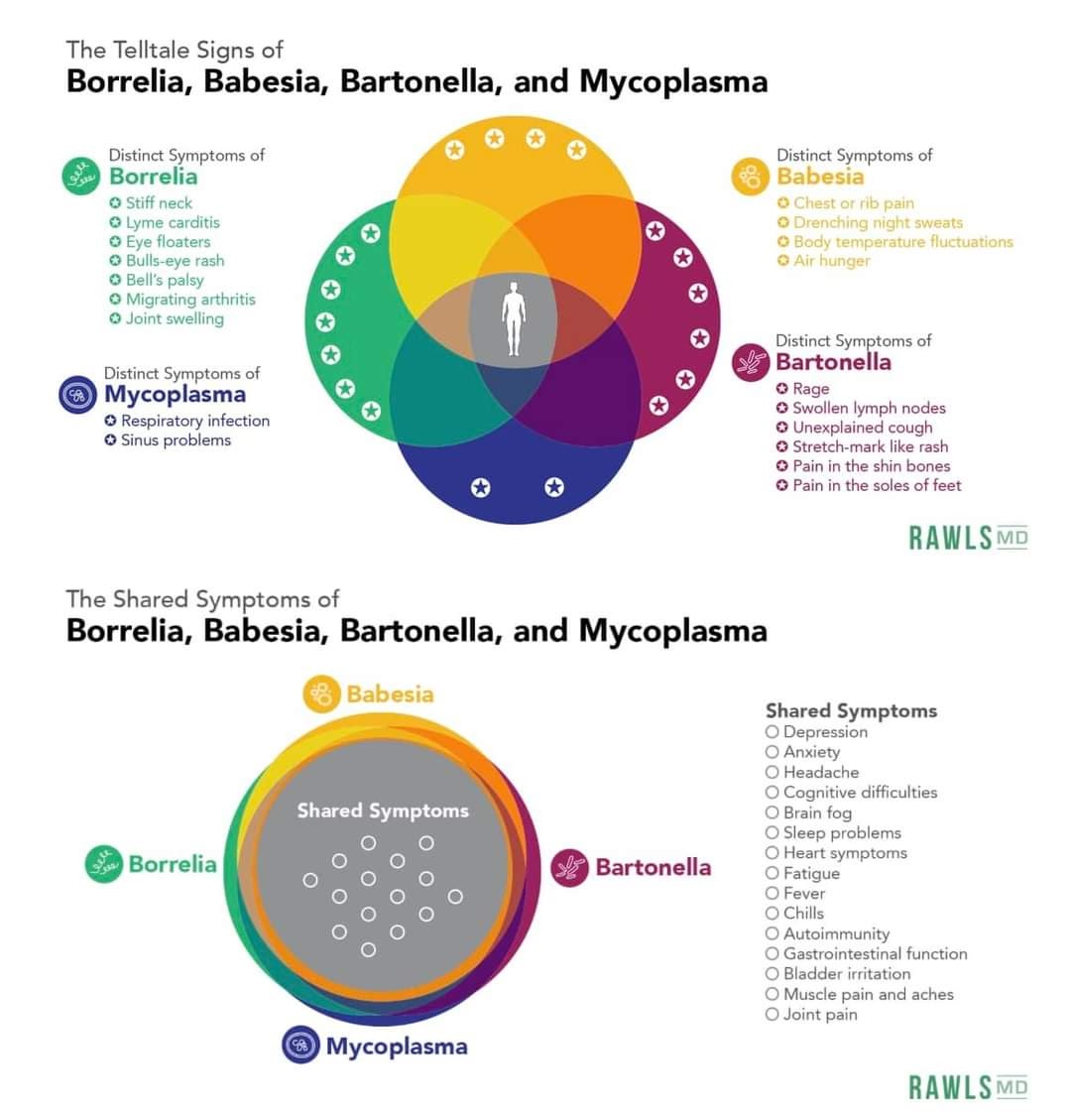
Since the CDC standard for testing for Lyme Disease is not very accurate, my current doctor uses a variety of other methods for testing and diagnosis. There are private labs that take deeper dives into testing for Lyme Disease. He also uses patient symptoms (see images below). He has also been trained to use other blood test markers that strongly indicate Lyme Disease and use those blood test markers to look at the entire picture. He also uses other Lyme co-infections (Bartonella, Babesia, Mycoplasma, etc.) as possible indications of Lyme Disease. In my situation, he used previous testing results from a private lab, symptoms, other blood markers, immune responses to possible other co-infections, and the fact that I have severe mold toxicity. Mold toxicity and Lyme Disease frequently coexist. However, he is also not very concerned with diagnoses, because he would choose to treat my situation in much the same way with or without standard diagnoses. [Side Note: The only reason I have included the names of any pathogens we are treating in my blog posts at all is because it would be hard to explain otherwise given our diagnosis-driven society.]
How did I contract Lyme Disease?
There is no way to truly know. Have I been bitten by ticks in my lifetime? Yes. Have I ever had the immediate symptoms of Lyme Disease that the world recognizes as such? No. According to my doctor, many people do not show symptoms of Lyme Disease until the body is weakened for some reason. (For example, if a person has the gene that limits their ability to properly deal with mold, then mold might be what weakens their body and causes Lyme Disease to finally show itself.)
According to my doctor, other possible ways to contract Lyme Disease besides tick bites are:
1) Being bitten by another insect that transmits vector-borne pathogens (mosquitos, fleas, mites, spiders, etc.)
2) Having it transmitted from mother to child in utero
3) Having it transmitted during sex from one partner to another (There is still a debate about this one, and my doctor is uncertain.)
What are Lyme Disease Co-Infections and which ones do I have?
Lyme (Borrelia) co-infections are pathogens that often accompany Lyme Disease. Some common Lyme Disease co-infections are Babesia, Bartonella, and Mycoplasma. If a patient has Lyme Disease, it is likely that they may also have one or more of these co-infections.
Along with Lyme, my blood shows an immune response to both Bartonella and Mycoplasma so far. We may find out more information about Babesia in the future. (See the images below for more information about symptoms of Lyme and symptoms of common co-infections.)
Brutal. Years of missed opportunities by my doctors.
Beautiful. Finding a doctor who has been in a similar situation and seems to have become highly educated on this topic. Hope.
Just another day of . . . This Brutiful Life: The Brutal & Beautiful Moments of My Life.
(The images below are not from my doctor. They are from another expert in the field. Credit on images. Click on them to make them bigger.)

 This Brutiful Life